
Updated: 30 March, 2026
20 March, 2026
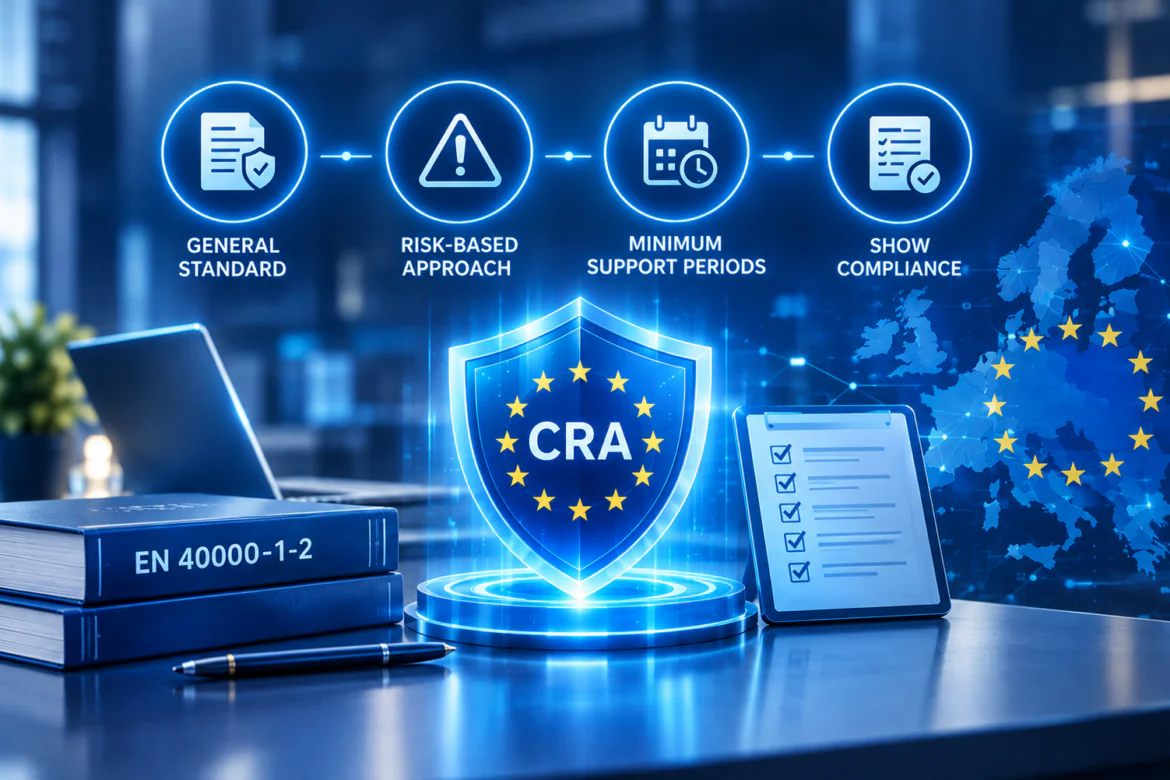
The Cyber Resilience Act (CRA) was introduced because the EU wanted to reduce the number of insecure digital products entering the market. Too many software products, devices, and connected systems were being sold with avoidable vulnerabilities, weak long term support, and too little transparency for users.
As digital products became more important to businesses, governments, and everyday life, the risks also grew. A security flaw in one product could affect not only a single user, but whole organizations and supply chains. At the same time, existing rules did not create one clear cybersecurity baseline for products with digital elements across the EU.
The CRA is the EU’s answer to that problem. It aims to make product security more consistent, make responsibilities clearer, and push producers to treat cybersecurity as part of the full product lifecycle.
Key Takeaways
- The Cyber Resilience Act was introduced because too many digital products were being sold with weak cybersecurity.
- The EU wanted to reduce avoidable vulnerabilities and improve security support over the full product lifecycle.
- Existing rules, standards, and voluntary approaches did not create one clear cybersecurity baseline for products with digital elements.
- The CRA shifts more responsibility to manufacturers and software producers, instead of leaving too much risk to users.
- For software producers, the CRA means security must be built in from the start and maintained over time.
The problem the Cyber Resilience Act is designed to solve
The Cyber Resilience Act was introduced because too many digital products were placed on the market with weak cybersecurity.
Software, connected devices, and other digital products had become part of everyday life. Businesses and consumers depended on them more and more. But security practices did not improve at the same pace. As a result, many products reached users with avoidable vulnerabilities.
Another problem was poor long term support. Security updates were not always provided in a consistent way or for long enough. This left known weaknesses unpatched and increased the risk for users and organizations.
Buyers also lacked clear information. It was often hard to understand how secure a product was or how long it would receive support. That made it difficult to compare products and make informed decisions.
Before the CRA, the EU already had rules that touched cybersecurity. But there was no single set of mandatory cybersecurity requirements for products with digital elements. This created a fragmented landscape with uneven expectations across the market.
In simple terms, the CRA was designed to fix a market where insecure products could still be sold, security responsibilities were often unclear, and too much risk was left to users.
Why existing rules and voluntary approaches were not enough
Before the CRA, cybersecurity was already covered by standards, guidance, and some EU laws. For example, NIS and later NIS2 imposed cybersecurity obligations on certain organisations. The EU Cybersecurity Act created a certification framework. The Radio Equipment Directive also introduced cybersecurity rules for some wireless products.
But these measures did not create one clear baseline for all products with digital elements. Some focused on organisations, not products. Others applied only to specific sectors or product types. Voluntary standards helped, but they were not enough to ensure consistent security across the market.
This meant security was still uneven. Some vendors invested in secure development and long term support. Others did far less. As a result, products with poor security could still compete.
The CRA was introduced to change that. It creates a more consistent baseline across the EU, so cybersecurity does not depend only on sector rules, voluntary action, or market pressure.
What is the CRA trying to change?
The CRA is meant to change how digital products are built, sold, and maintained in the EU.
In the past, security was often treated as an extra feature or something to fix later. The CRA pushes companies to treat cybersecurity as part of the product from the start. That includes design, development, documentation, updates, and vulnerability handling.
It also makes responsibilities clearer. Manufacturers and other economic actors are expected to take product security more seriously and support it over time. Security is no longer just the user’s problem after purchase.
The regulation also aims to improve transparency. Buyers and users should have better information about the security of a product and how long support will last. This makes it easier to compare products and make better decisions.
It is also important to understand the CRA timeline early, because some dates matter sooner than teams expect.
In simple terms, the CRA is trying to move the market away from reactive security and toward secure by design products with clearer accountability and ongoing support.
What The CRA Means for Software Producers Today
For software producers, the CRA means cybersecurity can no longer be treated as a separate compliance task at the end.
Security now needs to be part of how products are planned, built, released, and maintained. That includes reducing avoidable vulnerabilities, handling security issues in a structured way, and providing support after launch.
It also means teams need clearer ownership. Product, engineering, security, and compliance teams cannot work in isolation. The CRA pushes companies to treat product security as an ongoing responsibility, not a one time check before release.
For many organizations, this will require more mature development and governance practices. It is not only about meeting legal requirements. It is about being able to show that security is built into the product lifecycle in a consistent and repeatable way.
In practice, the CRA is pushing software producers to move from reactive fixes to a more structured security approach.
Conclusion
The Cyber Resilience Act was introduced because the EU saw a clear problem. Digital products had become essential, but their security was often inconsistent, unclear, and too easy to overlook.
The CRA is meant to change that. It creates a stronger baseline for product security and makes it clearer that cybersecurity is a responsibility of the producer, not just the user.
For software producers, the message is simple. Security can no longer be treated as something to add later. It needs to be built into the product from the start and maintained over time.
That is what makes the CRA important. It is not only a new compliance requirement. It is an attempt to improve the security of digital products across the market.
Are you ready for CRA?
With the CRA Framework in SAMMY, you can assess CRA compliance for your different products. The questions and quality criteria give you a complete checklist of everything that is required by CRA. SAMMY also makes it easy to compare products groups, manage compliance roadmaps and collaborate with team members.
Find out more about the SAMMY tool for CRA assessments.
Official resources